




Do you use a lot of semi colons? Or have really good grammar? Whenever I see that shit unfortunately I yell Ai and grab my pitchfork.
 11

I saw this recently, can’t say i agree with every point but it’s not terrible https://youtu.be/ORgKY9AlybA?si=uk6RoLcnyN5qqYWp
2  #1 10w
Yes, I love semicolons, though I never use em dashes. I believe my grammar is pretty good, which should be common practice for writing, so I wonder if intentionally using poor grammar is the fix. I’m not sure how that wouldn’t degrade the quality of the writing, though.
7 OP 10wyeah I understand. I hate having to dumb down my work to pass the AI checks for university. But honestly the semi colon isn’t really necessary and is definitely I red flag. I think eliminating those alone will help a lot
3 #1 10wLmao I have thousands of them across my books (I wrote an eight part saga)
2 OP 10wI am on the editorial team for a decently sized magazine and the way we think about it has very little to do with the grammatical structure—almost all good pieces of writing have a complex and specific grammatical voice! Punctuation-wise, it is all about what it is doing with it and why.
3 #2 10wBasically don’t delete your saga or dumb yourself down, is what I’m saying.
2 #3 9wHelpful
1 #2 9wWow could you tell me a little more about this? It sounds interesting
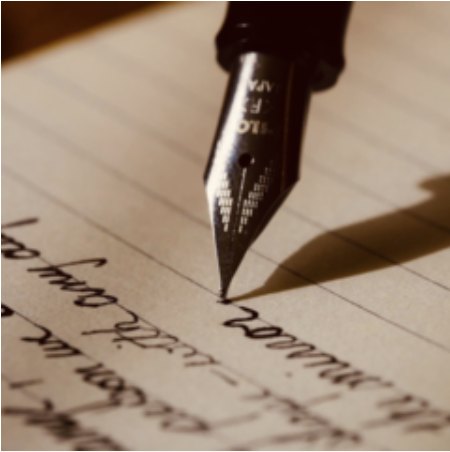
1 OP 9wI am a huge syntax nerd and will not try to go on a crazy diatribe here but could go on for days! I attached the beginning of the opening sentence of the novella Agapē Agape (which is considered [mostly] good). This book creates its own grammar rules by throwing the reader straight in. They are forced to realize that a comma here functions as a full-ish stop. This is a kind of writing AI would never think of. When I am reading I always ask myself what is the internal logic for an em dash…
7 OP 9w…and obviously it won’t be as extreme, usually. An AI model is predictive but will draw on all kinds of usages. Is the author using a semicolon to chain thoughts with the same subject? To make full-sentence lists? The balance is such a crucial part of it, because an AI model will almost always use it to balance (not this; this) (this; this) because it can’t think ahead.
4 #2 9wOh that’s so interesting! My characters use ellipses a lot, and it’s usually the reader’s task to figure out why the character is hesitating for this specific sentence. I don’t used semicolons in dialogue, though, and I don’t use ellipses in narration
4 OP 9wSince I don’t use em dashes or parentheses, I often reassign their function to conjunctions or semicolons. Interestingly, the person who accused me of using AI acknowledged that my dialogue was 100% not AI written, but that they believed the narration was, because that makes sense somehow💀
3 OP 9wOh…they may just not know what they’re talking about, then. Also, you should definitely consider the em dash! They are clean and very beautifully functional. We read stories at editorial with em dashes all the time (almost 50%, if I had to guess) and rarely ask if it is AI.
1 #2 9wI do see them in works written frequently; I know JK Rowling uses them a lot, and I don’t really have a problem with them per se, I just simply never have used them
1